Suite Exchange Sponsored by ResNexus

Understand How Facebook Ads Work


Understand How Facebook Ads Work


By Nathan Gawlik
Nathan Gawlik's experience includes being a General Manager of a Hampton Inn and other front line roles such as a Banquet Captain, Front Desk Agent, Housekeeper, Catering Event Manager, and Director of Sales.
With the rise of social media, many marketers have found Facebook ad spend to be a worthwhile advertising channel. It can't be overstated that both Google Ads and Facebook Ads are powerful platforms, each catering to virtually every type of business.

Small businesses often have a limited marketing budget, so it can be challenging to decide where to spend your marketing dollars. While a multi-pronged approach to marketing is certainly advantageous, it can be costly and the lingo confusing. That's why we are going to review the benefits of Facebook Ads and how they work. 

How People Find Your Hotel Using Facebook

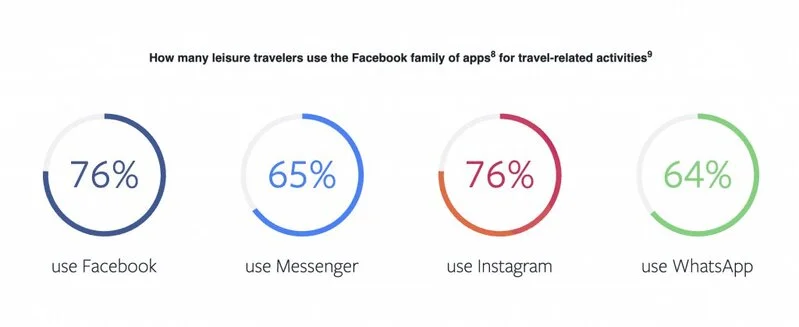
Facebook averages 1.8 billion daily users. Facebook found that 53% of travellers who say they use Facebook weekly look at family and friends' holiday pictures. And 38% of active instagrammers head to the app to discover travel photos and videos from influencers, celebrities and brands.
Facebook Trends
Now you might be familiar with Facebook Ads, but for travel, the platform has more settings. Check out the Ultimate Guide to Facebook Travel Ads.

Facebook Ads target travelers using four geographical segments: local, regional, national and global. Facebook's viewing of travel in this way helps hoteliers place relevant ads based on where potential guests are likely to be traveling. This allows you to adapt your message to engage with the guest in applicable ways based on their searcher intent.

For example, Facebook allows you to do radius targeting. Ad campaigns using this method have been particularly successful when using videos to promote staycations in the local area. 
Some successful ad messaging examples are:

  • Supporting Local Businesses
  • Rediscover your backyard
  • Deepening connection with those closest to you
  • Take a break from the status quo... to a B&B you shall go
  • Safety measure for customers and employees


Leverage your brand value proposition by capturing your customer's attention and highlighting what makes your property stand out. Partnering with creators and influencers can allow you to tell your story in a more authentic voice to a target audience.

You can also use Facebook's Travel Ads Prospecting solutions with Geofiltered Ad sets to reach people who have shown intent to travel. In a nutshell this tool helps businesses connect with travellers. You can present offers to prospective guests with real-time availability and pricing. Travel ads help your business because you can target people during multiple stages of the trip-planning process. Whether they haven't set a destination yet or if they have a certain place in mind, targeted Travel Ads campaigns have proven lucrative for many properties.

Take advantage of Retargeting

Retargeting, sometimes referred to as remarketing, occurs when a prospective customer visits your website but doesn't book. A retargeting ad may then appear on Google or another website reminding that shopper of your site.

Websites like Expedia, have vertical banner ads in their margin. An advertisement for your property could show up here, if someone navigated to your site and then went to Expedia, for example.

There are two types of retargeting: static and dynamic. 

Static Retargeting Versus Dynamic Retargeting

Static ads are traditional generic ads not catered to a specific demographic. Typically only one criteria or data point must be met for a static retargeting ad to be initiated, i.e. they visited your site but didn't book. Dynamic ads are often more granular, showing a specific room that the shopper viewed for example. A Static Retargeting ad is best for stand-alone properties not part of a larger cohort or brand. Static retargeting can be done with the Facebook Pixel by building a group of people who have been to a certain page but not yet booked. This type of retargeting allows videos, images, or carousels. A carousel is a slideshow or rotating banner of displays, using typically three or more images.

Both prospecting and static retargeting ads are pulled from your creative hub within Facebook's ad platform, but more on that below. 

How Facebook Auction Dynamics Affect Your Advertising Budget

It is important that your hotel, campground or B&B utilize their limited marketing budget on campaigns with the highest return on investment (ROI).

Understanding how Facebook's Auction works will help you ensure you are maximizing your results. Armed with the information that follows, you will be better able to stay competitive among the massive volume of signals users receive each day. When you are ready to start a Facebook Ad, check out our Ultimate How To Guide here

How Auction Dynamics Work

Facebook's algorithms autonomously find the highest bidder that is the most relevant ad for users to view. These are not room auctions we are talking about here, but ad auctions.

At the highest level, the Facebook ad platform is built to balance two fundamental goals:

  • Create the most value for businesses (ads)
  • Create an optimal experience for the Facebook consumer (users).


There are two key elements to delivering campaigns on Facebook: Ad Delivery and Ad Buying.

1. Ad Delivery

Ad delivery determines who sees your ads and is determined by the total value score within the auction.

Facebook auction utilizes a bid strategy by ranking ads that are targeting a given person, finding the most relevant one that maximizes value for advertisers and for users.

Although the highest bid wins in the auction, the winner pays less than what they bid. They typically pay closer to the second highest bid. Because of this, the optimal strategy is to bid the true value for a conversion - anything less and you lose opportunities and anything more and you will get non-profitable bookings.

Facebook's delivery system is constantly learning from what advertisers share about their audience and from how users interact with ads and businesses. Facebook seeks to understand the advertiser's intended business result. Facebook only shows your ad to those users most likely to engage.

The system also learns what makes negative ad experiences and applies these learnings to improve ad quality.

How Algorithms Affect the User Experience

The auction can be defined as a system to help Facebook prioritize ads for delivery. When an ad enters the auction, it competes with other ads targeting the same person eligible to see an ad. In an effort to show the right content to the right person at the right time, Facebook's algorithm balances the value to the brand and people using the platform.

Advertisers compete for a limited number of slots. This is because Facebook optimizes for user experience. Users wouldn't stay on Facebook if they only saw ad after ad in their feed.

Total Value of an Ad

The total value is calculated based on three key factors:

  • Advertiser Bid, This is your bid for the event you selected as your optimization goal or your desired result.
  • Estimated Action Rates, which can be described as what's the likelihood that an impression shown to this person will lead to your desired outcome?
  • User value is calculated. Facebook asks itself, how interesting do we think this individual is going to find this ad? Is this a high-quality ad?


Ultimately the equation looks like this:

Advertiser Bid X Estimated Action Rates + User Value = Total Cost

This is calculated in milliseconds for each ad each user sees. Meaning you could pay different amounts for the same ad depending on the above factors. 

2. Ad Buying 

Now that you know how Facebook determines how to deliver an ad to a user, we can go back to the second part of the puzzle, Ad Buying.

There are two ways to buy on Facebook's platforms: through the Auction or through reach and frequency buying. The auction allows you to have more control over your costs through the duration of a campaign. 
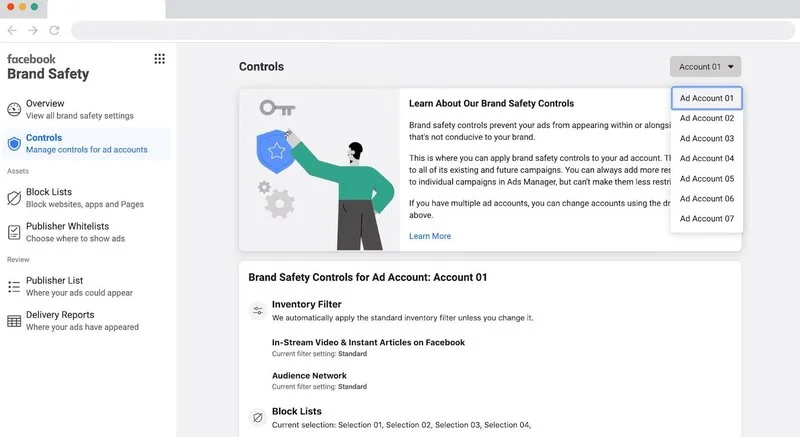
Facebook Brand Safety
Advertiser controls determine your pacing made up of six controls:

  • Marketing Objective - The main business or objective for the campaign.
  • Targeting - Who you wish to reach
  • Bid - If using the auction, how much the advertiser is willing to pay for an impression.
  • Budget - How much the company has to spend on advertising
  • Placement - What acts or services an ad may appear in.
  • Creative - visual merits of the ad but more on that can be found in our Ultimate Guide on Facebook Ads, under Creative Hub.


Let's finish up with more information on Market Objective, Targeting and Placement.

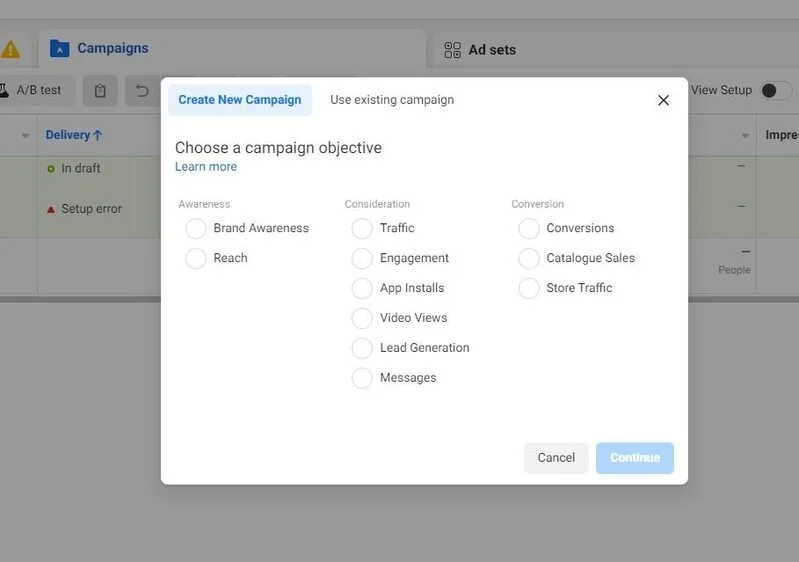
Facebook Marketing Objective

The chosen objective informs the auction of the marketing goal. These can range from brand awareness, video views, store visits, to conversion and dynamic travel ads, to name a few. After selecting the objective, your ad workflow and delivery options are customized in order to reach the audience most likely to reach the goal. 
Facebook Campaigns
Selecting an objective can be found under Ads Manager> Campaigns> Create Ad. Here you can also create spend limits. Your spending limit must be at least $100. 

Facebook Targeting

Targeting encompasses the target audience you're trying to reach and the optimization goal that is important to you. Facebook's machine learning algorithm factors your inputs as well as the engagements received by users to optimize and place the ad in front of users most likely to engage.

Some users will click, some will convert and others aren't likely to take an action at all. You can choose to optimize for clicks, conversions, or reach. Keep in mind that optimizing for reach means that more people will likely see your ad regardless if they are likely to convert or even click. This is great if brand awareness or views is your objective. However if you want bookers, then you will likely want to optimize for clicks and conversions.

Facebook Placement

Then you must consider where you want your ad to appear across Facebook's family of services. Options include Facebook, Messenger, Instagram, or Audience Network. Running ads in multiple placements will allow more opportunities to run your ad and higher likelihood of stronger performance. If you select the automate placements option you are likely to see higher results for the same budget. Understand that Facebook will optimize your placement for you so brands should not expect to see equal distribution across all channels.

Summary

Facebook ads can be a cost effective way to capture new guests. In fact, that's the best part about Facebook Ads: they help you get discovered and get new guests. Whether you are seeking brand awareness or more traffic to your site or even just engagement to start personal conversions with future guests, Facebook's communication tools can help.

For more information on how to set up a Facebook Ad, check out our other article here. This article will show you how to set up Facebook ads and the Facebook pixel step by step.
Marketing
MARKETING
Operations
OPERATIONS
Case Studies
CASE STUDIES
Theory
THEORY
Marketing
MARKETING
Operations
OPERATIONS
Case Studies
CASE STUDIES
Theory
THEORY
SIGN UP FOR OUR NEWSLETTER